Employer profile · offshore wind renewables
Siemens Gamesa
Siemens Gamesa's Hull factory makes the blades that go on offshore wind turbines around the UK and Europe, and it has grown into one of the Humber's most significant single employers since production started.
Updated 3 September 2026

What Siemens Gamesa does
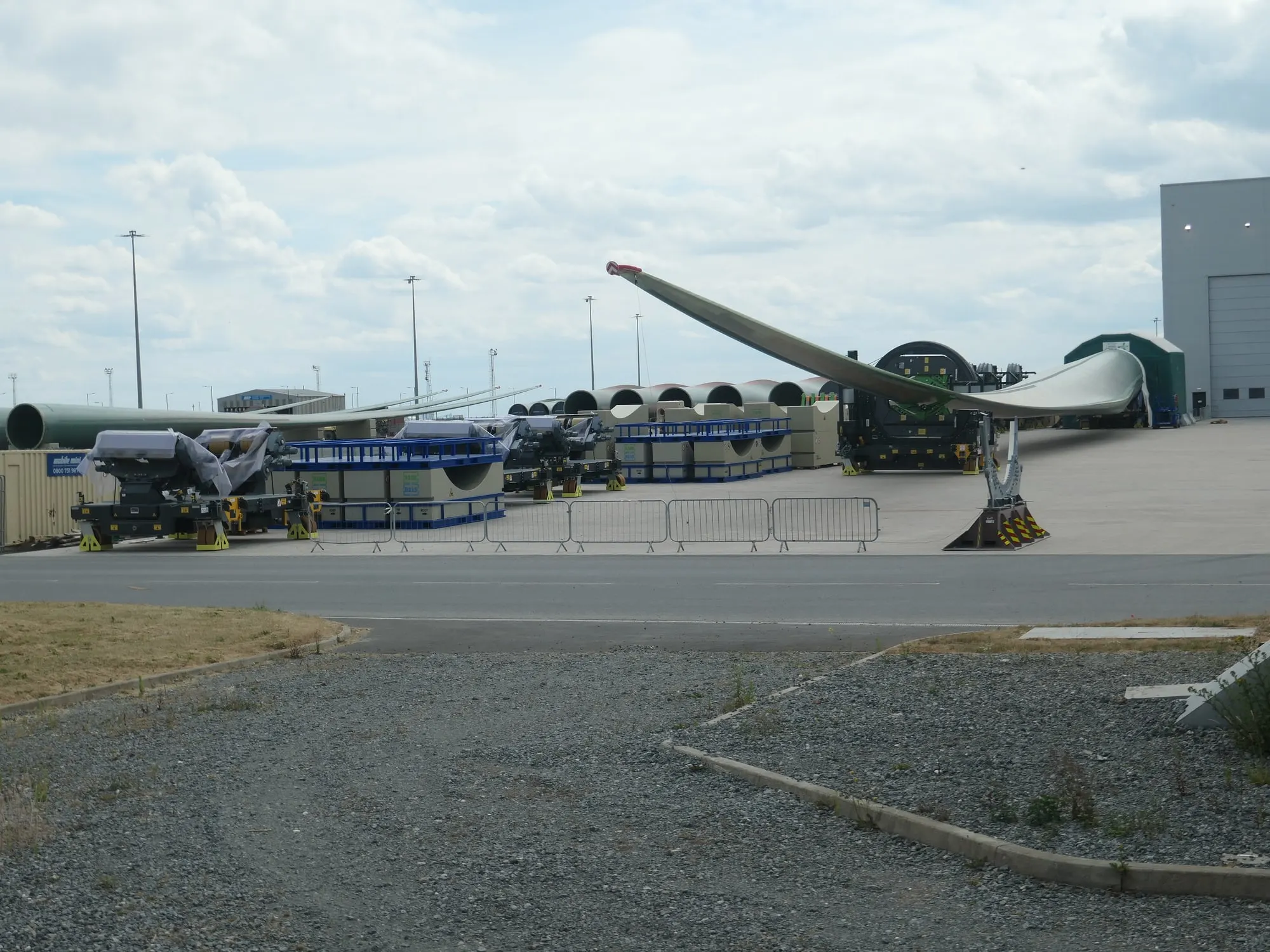
Siemens Gamesa is a global wind turbine manufacturer, part of Siemens Energy, with its overall headquarters in Zamudio, Spain. Its Hull site, on Alexandra Dock, makes rotor blades for offshore wind turbines: enormous fibreglass and resin composite structures manufactured, finished and shipped out by water to wind farm construction sites around the UK and near-continental Europe. The factory was one of the first of its kind built specifically for the UK offshore wind market, and it sits at the centre of what the Humber region has branded itself as the “Energy Estuary” — see our offshore wind and renewables sector guide for the wider picture of how wind energy work is developing across Hull, Grimsby and the estuary.
Scale of the Hull operation
The Hull factory is the UK’s largest offshore wind manufacturing site, and it now employs around 1,300 people. That headcount has grown fast: the company ran an 18-month hiring drive that brought in more than 850 new starters, a pace of recruitment that is unusual for the region and reflects both the scale of blade production and the wider expansion of the UK offshore wind pipeline that Siemens Gamesa supplies into.
Blade manufacturing at this scale is a genuinely industrial operation. Composite blades are laid up, cured, finished and tested in a purpose-built facility large enough to handle components tens of metres long, before being moved to the dockside for loading onto vessels. It is a production environment that runs shifts, and the work is physically and technically demanding in ways that differ from a typical office-based manufacturing role.
Typical roles and departments
A site of this size and type covers a wide span of roles, from the shop floor through to engineering and site management. Roles you would typically expect to find at a blade factory of this kind include:
- Production and manufacturing operatives — laying up composite materials, operating curing and finishing equipment, working on the production line
- Quality control and inspection — checking blades meet structural and safety standards before they leave the site
- Manufacturing and process engineers — improving production methods, troubleshooting equipment and materials issues
- Health, safety and environmental staff — a significant function on any site handling large composite structures and industrial processes at scale
- Logistics and warehouse roles — managing materials in and finished blades out via the dockside
- Supervisory and team leader positions — overseeing shift teams on the production line
- Support functions — HR, finance, procurement and site administration, as at any large manufacturing employer
Pay varies considerably by role, shift pattern and experience. As a broad, general guide, entry-level production roles in UK offshore wind manufacturing typically start somewhere in the mid-£20,000s, with skilled technical, engineering and supervisory roles reaching significantly higher; these are indicative UK manufacturing sector ranges rather than figures tied to any specific current Siemens Gamesa vacancy, so always check the actual salary on any advertised role.
The Hull College apprenticeship partnership
Siemens Gamesa runs its apprenticeship programme in partnership with Hull College, taking on up to around 30 new apprenticeships jointly through the scheme. This is one of the more visible routes into the company for school leavers and career changers in the city who want to train on the job rather than go straight into higher education.
Apprenticeships of this kind typically combine practical, hands-on training on the factory floor with structured off-the-job learning delivered through the college, working towards a recognised engineering or manufacturing qualification. For anyone weighing this route up against a degree, our guide on apprenticeships vs university sets out the general trade-offs, and our dedicated piece on how to become a wind turbine technician covers the wider set of entry routes into wind sector technical careers, on top of what happens inside the blade factory itself.
What it’s like to work there, in honest terms
Working at a large-scale manufacturing site like this suits people who are comfortable with structured shift work, physical tasks, and being part of a big operational team rather than a small, informal workplace. The upside is job security tied to a genuinely long-term UK industry — offshore wind is a growing sector across the Humber rather than a short-term contract, and the scale of recent hiring suggests the site has been in sustained expansion mode rather than a one-off recruitment push.
As with any large industrial employer, day-to-day experience will vary a good deal by department, shift pattern and line manager, and independent, up-to-date reviews of working conditions from current or recent staff are limited in what we can verify. Anyone considering applying should treat this profile as a starting point for research, not the full picture, and use the interview stage to ask directly about shift patterns, progression routes and what a typical working week actually looks like.
How to apply
Siemens Gamesa’s own website is the place to check current vacancies at the Hull site, since roles and application windows change regularly and specific openings aren’t listed here. If you’re preparing an application, our general advice on writing a CV with no experience and switching careers after 30 may be useful depending on where you’re starting from, and the Hull locations page has wider context on the city’s job market beyond this one employer.
Independent editorial profile written by Humber Careers; not sponsored by or supplied by Siemens Gamesa. Confirm current details on the employer's own site before applying.