Sector guide
Chemicals & Process Industry Careers in the Humber
The south bank of the Humber is home to one of the UK's most concentrated clusters of chemicals and refining, offering process, engineering and craft careers that rarely require a degree to start.
Updated 3 September 2026
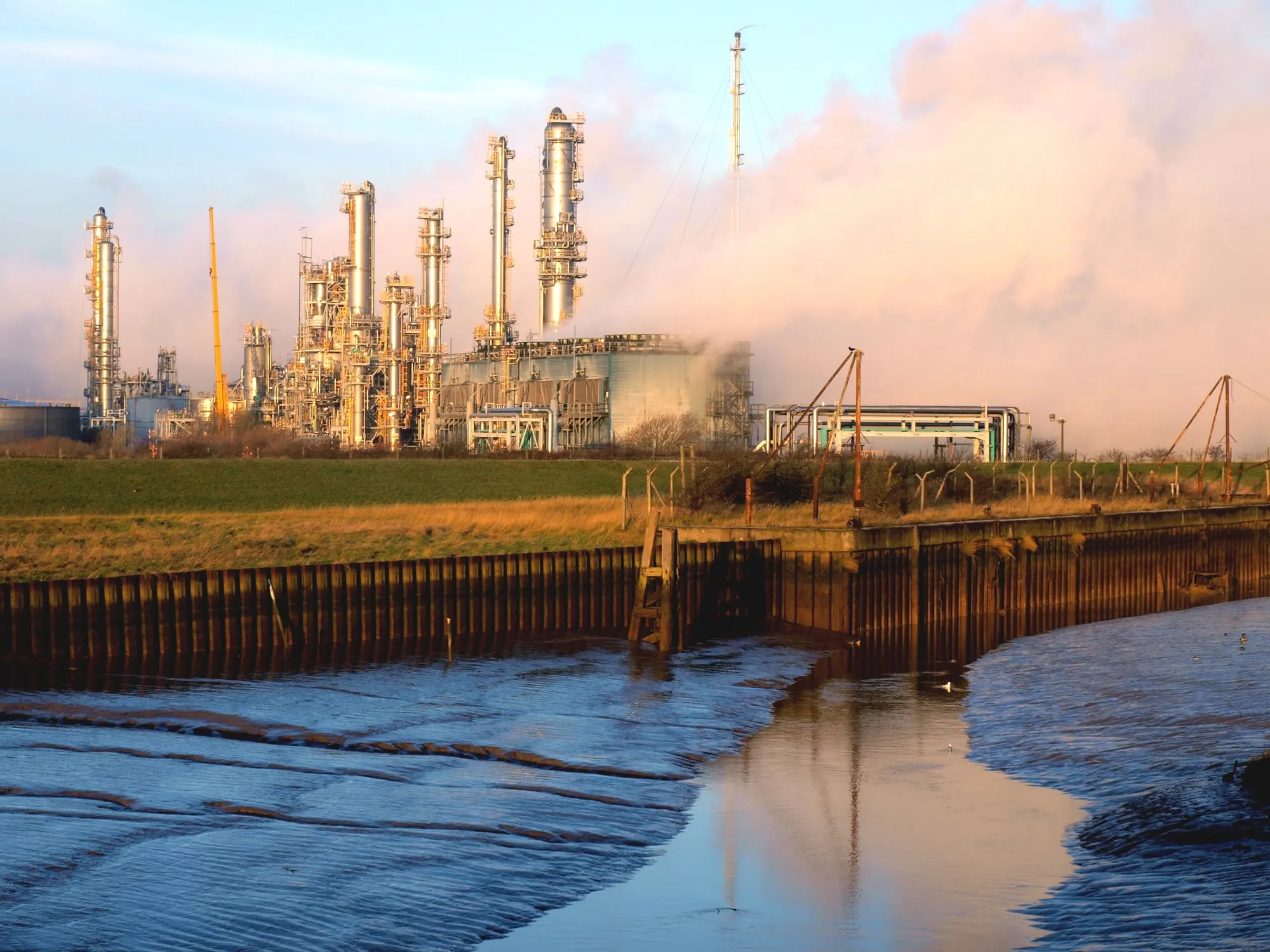

The stretch of the Humber estuary between Hull and Immingham is one of the most industrially dense corridors in the UK, and chemicals and process manufacturing sit at the heart of it. From the sprawling Saltend Chemicals Park east of Hull to the Phillips 66 Humber Refinery at South Killingholme, this is a sector built on continuous production, tight safety discipline and genuinely skilled work — much of it accessible without a university degree.
Why this sector matters in the Humber
Saltend Chemicals Park, owned by px Group, is a working example of how concentrated this part of the region’s economy is. Within its boundary sit INEOS, Mitsubishi Chemicals and Vivergo Fuels, alongside LanzaTech’s newer sustainable aviation fuel plant — meaning a single site brings together bulk chemicals, specialist manufacturing and next-generation fuel production under one roof. A few miles east along the south bank, the Phillips 66 Humber Refinery at South Killingholme, near Immingham, is one of the region’s largest single industrial employers, with roughly 750 to 1,100 people on site plus a substantial contractor workforce supporting turnarounds and major projects.
What makes the sector distinctive locally is its permanence. These are not short-term construction projects but plants that have operated for decades and need a steady pipeline of process operators, engineers and craft tradespeople to keep running safely around the clock. That translates into apprenticeship intakes, graduate schemes and experienced-hire vacancies that recur year after year, rather than a one-off hiring spike. The sector also sits close to the Humber’s ports and logistics network — feedstocks and finished products move through Immingham and the wider Humber ports, and the Humber Freeport tax sites at Hull and Immingham are aimed partly at attracting further chemicals and energy investment to the estuary.
Typical roles and what they pay
Process and chemicals sites need a mix of operational, engineering and trade skills, and the entry points differ accordingly.
- Process Operator — the people who run and monitor plant on a day-to-day basis, from control rooms and on the ground. Pay is typically around £30,000–£42,000, reflecting shift allowances for round-the-clock rotas. Entry is usually through site-based training or a Level 3 process technician apprenticeship rather than a degree.
- Process Engineer — responsible for optimising and troubleshooting production processes, often working toward chartered engineer status over time. Salaries typically range from around £32,000 up to £50,000 or more with experience, and this route usually starts with a chemical, process or mechanical engineering degree, frequently via a graduate scheme.
- Instrumentation Technician — maintains and calibrates the control systems, sensors and automation that keep a plant running safely. Typical pay sits around £30,000–£40,000, and the standard entry route is a Level 3 engineering apprenticeship with an instrumentation and control specialism.
- Craft Apprentice — the entry point into skilled trades such as mechanical, electrical and instrumentation work. Apprentice pay rises each year of the programme, stepping up to a full skilled tradesperson’s salary on completion.
These figures are broad, indicative ranges based on general UK labour-market patterns for the sector — actual pay depends on the specific employer, shift pattern, experience and any relevant qualifications or chartership.
How to get in
There’s no single route into chemicals and process careers on the Humber, which is part of what makes the sector approachable for people at very different stages of their working life.
- Apprenticeship, straight from school or college. This is the most common entry point for process operator, instrumentation and craft roles. The Phillips 66 Humber Refinery runs a four-year craft apprenticeship covering mechanical, electrical and instrumentation disciplines, taking on up to around 12 apprentices a year — competitive, but a genuinely well-regarded route into a skilled trade with a large employer. Search current openings via GOV.UK’s Find an apprenticeship service, and see our broader guide to apprenticeships in Hull for related opportunities nearby.
- Direct entry as an operator or technician. Some sites recruit experienced operators and technicians directly from other industrial or manufacturing backgrounds, particularly people with relevant safety-critical experience elsewhere.
- Degree route into engineering. Process and chemical engineering graduates typically join through structured graduate schemes, sometimes progressing to chartered status. Local providers including the University of Hull offer relevant engineering study; see degree apprenticeships at the University of Hull for a route that combines a degree with paid work.
- Career change. People moving from other technical or industrial backgrounds — the armed forces, other manufacturing sectors, or skilled trades — are a real part of the recruitment pool for process and craft roles, since safety discipline and hands-on technical aptitude transfer well. If you’re weighing this option, our guide on switching careers after 30 covers how to present transferable experience.
Specialist technical training for the sector is also available locally through CATCH, a process, energy and engineering training provider based close to Saltend, and through general engineering apprenticeship providers such as HETA, which works with several hundred companies across the region. For a broader look at engineering apprenticeship routes, see our guide to engineering apprenticeships with HETA.
Key employers to know
Saltend Chemicals Park, owned and managed by px Group, functions as a shared industrial site rather than a single employer — INEOS, Mitsubishi Chemicals, Vivergo Fuels and LanzaTech all operate there, giving the park a mix of established bulk chemicals production and newer, lower-carbon fuel technology on the same footprint. That mix matters for jobseekers: a career at Saltend can mean anything from long-established chemical manufacturing processes to work on LanzaTech’s newer sustainable aviation fuel plant, so it’s worth looking closely at which operator is actually hiring for a given role.
Phillips 66 Humber Refinery at South Killingholme, near Immingham, is one of the largest single industrial sites on the south bank of the estuary, employing roughly 750 to 1,100 people directly plus a sizeable contractor presence for maintenance and turnaround work. Its four-year craft apprenticeship is one of the more established structured entry routes into the sector locally, and the refinery’s scale means it also recruits across process operations, engineering, and a wide range of technical support functions.
Looking ahead
Chemicals and process manufacturing on the Humber is not a sector chasing a single boom — it’s built on long-running, capital-intensive plant that needs a steady flow of skilled people to keep operating safely. As LanzaTech’s newer fuel technology sits alongside more established chemicals production at Saltend, and as the wider Humber Freeport push for investment continues, the mix of roles on offer is likely to broaden even as the fundamentals — safety-first culture, shift-based operations, and strong apprenticeship pipelines — stay much the same. For anyone weighing up a practical, well-paid technical career that doesn’t require a degree to start, it remains one of the more overlooked options on the Humber. If you’re still deciding between sectors, our sectors hub compares this one against the region’s other major employers.
Questions people ask
Do I need a degree to work at Saltend or the Phillips 66 refinery?
No. Process operator, instrumentation and craft roles are typically entered through apprenticeships or site-based training rather than a degree. A degree becomes more relevant if you're aiming specifically for process engineering, chemical engineering or a technical specialist route, though some engineers also progress internally from technician roles.
What does the Phillips 66 craft apprenticeship involve?
It's a four-year programme covering craft disciplines such as mechanical, electrical and instrumentation trades, combining structured off-the-job training with hands-on experience at the Humber Refinery. The refinery takes on up to around 12 apprentices a year, so places are competitive and it's worth applying as early as your final year of school or college allows.
Is shift work required in chemicals and process roles?
For most operational roles, yes. Sites like Saltend and the Humber Refinery run continuously, so process operators and many technicians work rotating shift patterns including nights and weekends. This is usually reflected in the pay, and some people specifically prefer the structure and time-off patterns that shift work brings. Engineering, planning and support roles are more likely to be standard daytime hours.
What safety qualifications or checks will I need?
Sites handling hazardous chemicals and fuel run rigorous safety inductions, and most operational and craft roles require you to pass site-specific safety training before you're allowed to work unsupervised. Employers will set out exactly what's needed during the application and onboarding process, and much of it is provided as part of your induction rather than something you need to arrange yourself beforehand.