Employer profile · engineering and manufacturing
Siemens Mobility — Goole
Opened in October 2024 on a 67-acre site beside the M62, Siemens Mobility's Goole Rail Village assembles London Underground's new Piccadilly line trains and has been building its workforce, and its apprentice intake, in stages since 2020.
Updated 3 September 2026
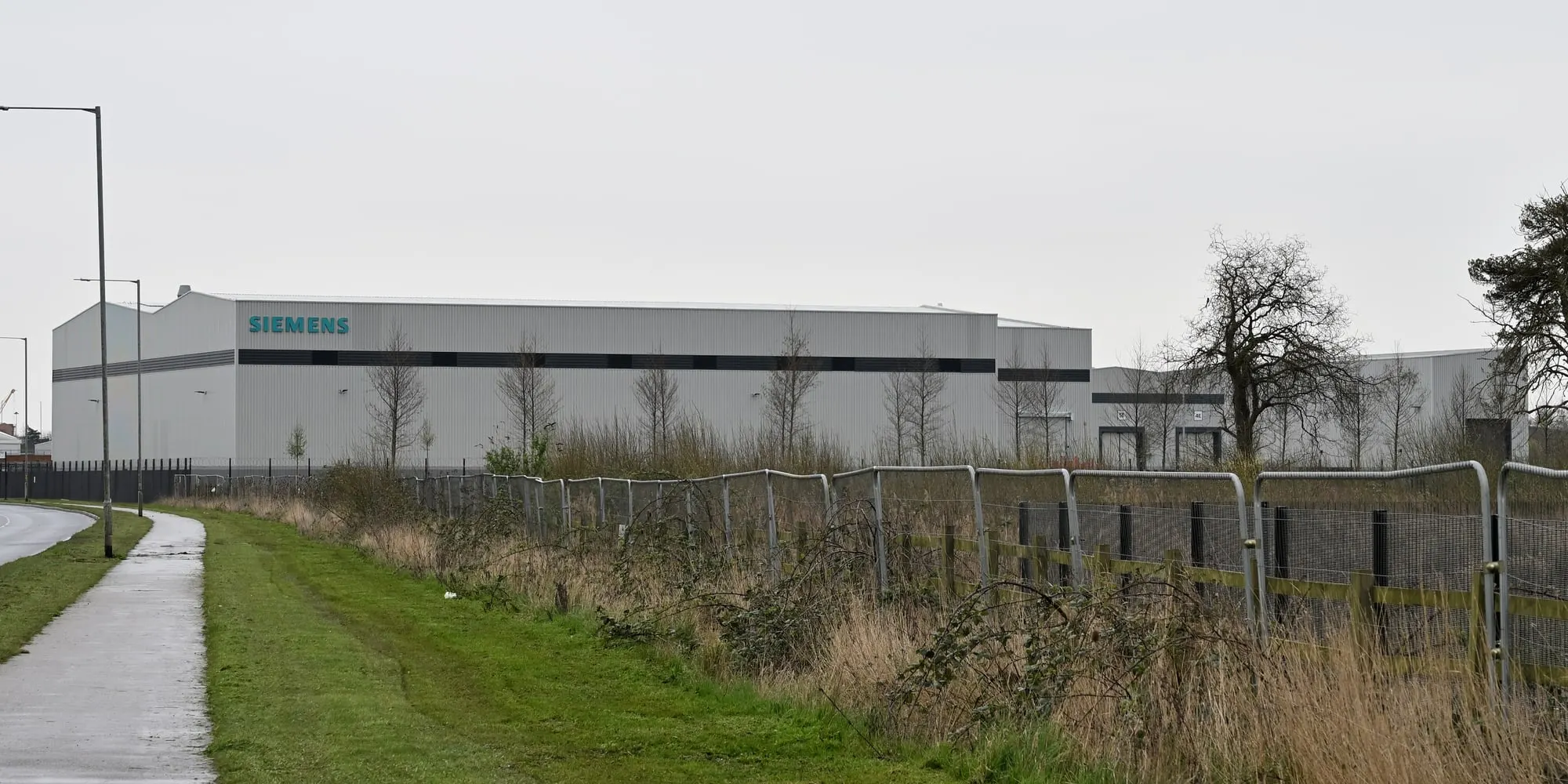

Goole is a port town on the Yorkshire side of the Humber, better known for its docks than for high-tech manufacturing. That changed in October 2024, when Siemens Mobility formally opened its Goole Rail Village, a £200m train factory and rail engineering campus on 67 acres beside the M62. It sits close to Goole’s Humber Freeport tax site. For context, see our engineering and manufacturing sector guide and the Goole jobs and careers page.
What Siemens Mobility does
Siemens Mobility is the rail and transport arm of Siemens, the German engineering group. In the UK it builds, maintains and services trains, signalling and rail infrastructure. What it lacked, until Goole, was a British factory to build trains in. In 2018 it said it would build one if it won a large enough order, and later that year it did: a contract worth around £1.5bn for 94 new trains for London Underground’s Piccadilly line.
The Goole Rail Village
Production of the first Piccadilly line trains began in spring 2024, and the site opened officially on 3 October 2024. Siemens describes it as an integrated rail hub rather than just a factory:
- The Train Manufacturing Facility — where trains are assembled and commissioned
- The Components Facility — overhauling gearboxes, traction motors and other parts for train and tram fleets across the UK
- A Logistics Centre — warehousing and rail components distribution
- RaisE — a business centre for rail supply-chain and innovation firms alongside the factory
A further £40m Bogie Assembly and Service Centre, announced at the opening and due to be operational towards the end of 2026, is intended to secure around 100 existing jobs and create up to 200 more.
Around 80% of the new Piccadilly line trains are being assembled at Goole, with the rest built at Siemens’ Vienna plant. According to Transport for London, the first new trains are due to enter passenger service between late 2026 and mid-2027. Siemens has also said future trains it builds for the UK, including battery-powered designs, will come from Goole.
Jobs and scale
Siemens’ figures describe what the site is meant to become rather than a current headcount: up to 700 direct skilled jobs, up to 1,000 across the wider site, and around 1,700 in the supply chain. The company does not publish a live staff number for Goole and the workforce has been built up in stages since 2020, so the real figure at any point is likely to sit below the headline target.
Typical roles at a train manufacturing site of this kind include:
- Production technicians and fitters — mechanical and electrical assembly of vehicle bodies, interiors and systems
- Commissioning and test engineers — bringing completed trains into working order before delivery
- Quality and inspection roles — a large function on a safety-critical product
- Components and overhaul technicians — working on gearboxes, motors and bogies
- Logistics, warehousing and materials control, plus manufacturing, design, project, commercial and support roles
As a broad indicative guide only, UK rail manufacturing technicians typically earn around £28,000–£38,000 depending on experience and shift pattern, with commissioning, test and design engineers often in the £35,000–£50,000 range. These are general sector ranges, not Siemens figures.
Apprenticeships and graduates
Apprenticeships have been part of the Goole plan from the start. The first cohort of 12 Level 3 rail technician apprentices began in September 2020, before the factory was built, on a three-year programme with Selby College that included placements at Siemens train depots and at the Vienna factory. A more recent September intake was larger: 24 young people aged 16 to 26, 22 apprentices and two graduates, across manufacturing, logistics, quality, commissioning, components, materials control, operations and commercial teams.
Siemens recruits apprentices, graduates and interns through its UK early careers pages and central jobs portal, where Goole vacancies appear. Our guides to engineering apprenticeships through HETA and apprenticeship interview tips are useful background.
Working at Goole, in honest terms
The appeal is obvious: a new factory, a global employer, a long production run already secured and serious investment in training. The caveat is that train manufacturing runs on orders, and the size of the workforce beyond the Piccadilly contract will depend on what Siemens wins next. Independent public information about day-to-day conditions at the site is limited, and this profile draws on Siemens’ announcements and press reporting rather than staff accounts. Check the Siemens Mobility careers page for current Goole vacancies.
Independent editorial profile written by Humber Careers; not sponsored by or supplied by Siemens Mobility — Goole. Confirm current details on the employer's own site before applying.
Sources
- –Siemens UK news — New Goole Train Manufacturing Facility opening marks significant milestone (October 2024)
- –Siemens UK news — 80% of new Piccadilly line trains will be built in Yorkshire, Siemens Mobility confirms
- –Siemens UK news — Siemens Mobility's first Goole apprentices start college (September 2020)
- –The Hull Story — Siemens Mobility welcomes bumper intake of young talent to rail village
- –Transport for London — State-of-the-art Piccadilly line trains to begin operating in 2026
- –Wikipedia — Siemens Goole
- –Siemens UK — Early careers