Apprenticeship guide
Apprenticeships in Grimsby & North East Lincolnshire
What's available, how the levels work, and where to train if you're starting an apprenticeship in Grimsby or North East Lincolnshire.
Updated 3 September 2026
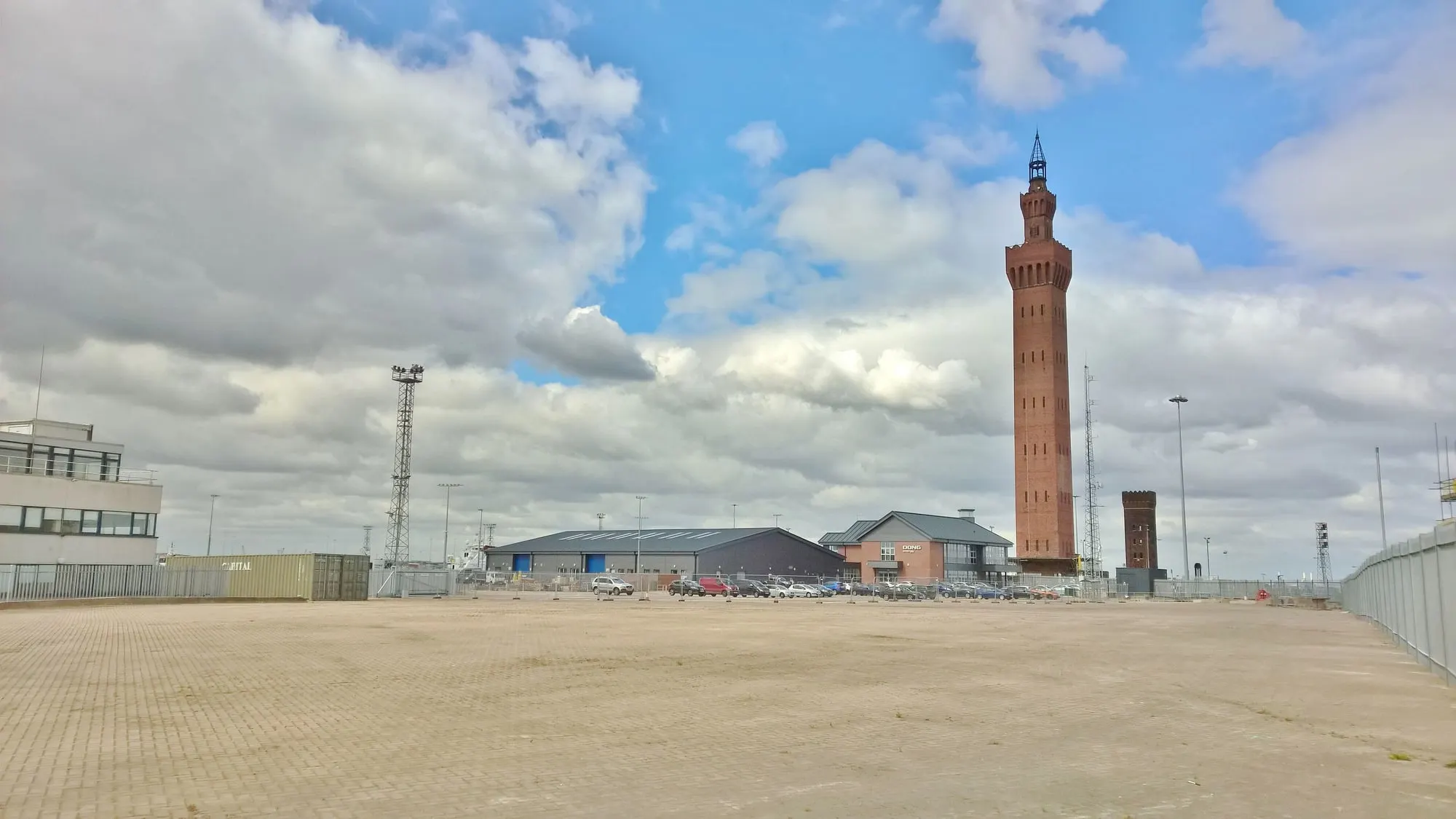

Grimsby and North East Lincolnshire have a distinctive apprenticeship landscape, shaped by two industries that sit almost on top of each other: food manufacturing and process engineering. Grimsby is one of the world’s largest seafood-processing clusters, sometimes called “Europe’s Food Town”, and that scale of production creates apprenticeship demand across engineering, food technology, quality and logistics roles. Just along the coast at Immingham and South Killingholme, the process and energy sector adds a second, complementary stream of technical apprenticeships, and offshore wind growth centred on Grimsby’s port is now adding a third.
What’s available locally
The largest concentration of apprenticeship opportunity in Grimsby sits in food manufacturing. Young’s Seafood, which employs a substantial local workforce and supplies around 40% of the fish eaten in the UK, is the sector’s best-known employer, but it sits within a much wider cluster of seafood processors, packers and associated engineering firms that between them need a steady pipeline of maintenance engineers, food technologists, quality technicians and production apprentices. These roles are less visible than office-based apprenticeships but tend to offer solid progression, since food manufacturers rely on a permanent in-house engineering function to keep production lines running.
The second major strand is process and energy engineering, concentrated at Phillips 66’s Humber Refinery at South Killingholme, near Immingham. The refinery runs a four-year craft apprenticeship programme, typically taking on up to around 12 apprentices a year, in disciplines such as instrumentation, electrical and mechanical craft skills. It’s a competitive route in given the small cohort, but it leads to a recognised craft qualification and, for many, a long-term career at the site. The wider process sector around the Humber, including Saltend Chemicals Park near Hull, follows a similar model, so skills gained locally transfer well across the estuary.
Offshore wind is the fastest-growing addition to the local picture. Ørsted’s operations base in Grimsby currently employs around 200 people, with plans to grow toward roughly 500, and its Hornsea 3 project is expected to generate up to 5,000 construction-phase jobs plus around 1,200 permanent roles at a new Grimsby operations hub. Not all of these are apprenticeships, and many will be contractor and supply-chain positions, but the scale of investment means apprenticeship routes into wind turbine maintenance and technical support are opening up locally — see how to become a wind turbine technician.
Around these three anchors sit steady apprenticeship opportunities in ports and logistics — Grimsby is one of the ports operated by Associated British Ports (ABP), alongside Immingham, Hull and Goole — plus retail, hospitality, health and social care, and administrative apprenticeships found in any town of Grimsby’s size.
How apprenticeship levels work
English apprenticeships run from Level 2 to Level 7, and the number roughly tells you how the apprenticeship compares to more familiar qualifications:
- Level 2 (Intermediate) — broadly equivalent to five good GCSEs. A common starting point in food production, hospitality and warehouse roles.
- Level 3 (Advanced) — broadly equivalent to two A-levels. This is where most craft and technical apprenticeships sit, including early years of engineering and process apprenticeships.
- Level 4–5 (Higher) — equivalent to a foundation degree or HND. Often taken after a Level 3, or as a direct entry route for those with A-levels.
- Level 6 (Degree) — equivalent to a full bachelor’s degree, combining work with part-time university study.
- Level 7 (Master’s) — equivalent to a postgraduate qualification, typically for experienced staff moving into specialist or leadership roles.
You earn a wage throughout, your training costs are covered by your employer and the government’s apprenticeship levy system rather than by you, and most apprenticeships combine on-the-job work with structured off-the-job training at a local college or specialist provider. If you’re weighing this up against a traditional degree, see apprenticeships vs university.
Where to train: TEC Partnership and CATCH
The main further education provider for Grimsby apprenticeships is TEC Partnership, formed from the former Grimsby Institute together with University Centre Grimsby and East Riding College. Between them, these campuses deliver apprenticeships from Level 2 through to degree level, spanning engineering, food and manufacturing technology, business, health and social care, and other vocational areas. University Centre Grimsby in particular gives apprentices a route to higher-level study without relocating away from the area.
Alongside TEC Partnership sits CATCH, a specialist training provider focused on process, energy and engineering skills, closely linked to the industrial base around Saltend, Immingham and South Killingholme. CATCH’s training is geared specifically toward the technical, safety-critical skills that process and energy employers need, and it works alongside employers such as Phillips 66 to deliver apprenticeship training that maps directly onto the qualifications those companies require.
Between TEC Partnership’s broad vocational offer and CATCH’s technical specialism, Grimsby apprentices have reasonably comprehensive local access to training without needing to travel into Hull for most routes, though some degree apprenticeships may still involve study at partner universities elsewhere in the region.
How to apply
- Search live vacancies on GOV.UK’s Find an apprenticeship service, which lists every registered apprenticeship vacancy in England, including Grimsby and North East Lincolnshire.
- Contact TEC Partnership or CATCH directly to ask about upcoming intakes, taster days or pre-apprenticeship courses if you’re unsure which pathway suits you.
- Check employer career pages for major local employers, including Phillips 66’s Humber Refinery, ABP and Young’s Seafood, which sometimes advertise apprenticeship intakes separately from general recruitment.
- Prepare a CV and application, even for roles that emphasise “no experience necessary” — a clear, honest application still stands out. See our guides on writing a CV with no experience and cover letter templates for apprenticeships.
- Use the National Careers Service (nationalcareers.service.gov.uk) for free, impartial advice if you’re still deciding between routes, sectors or levels.
For more on searching across the wider region, see finding a job in the Humber, and for the equivalent picture across the estuary, our Hull apprenticeships guide.
Questions people ask
What's the minimum wage for an apprentice in Grimsby?
Apprentices are legally entitled to the national apprentice minimum wage if they're under 19, or in the first year of their apprenticeship. After that, or once you turn 19, you move onto the National Minimum Wage for your age band. In practice, many Grimsby employers in food manufacturing, process and engineering pay above the statutory minimum to attract apprentices, particularly from Level 3 onwards, so it's always worth checking the specific pay rate advertised for a vacancy rather than assuming the legal minimum.
Do I need qualifications to start an apprenticeship in Grimsby?
It depends on the level. Level 2 intermediate apprenticeships often ask for a small number of GCSEs, sometimes including English and maths, though some entry-level food and warehouse apprenticeships have lighter requirements. Level 3 typically expects five GCSEs at grade 4/C or above, including English and maths. If you don't yet have GCSE English or maths, most providers, including TEC Partnership, will build functional skills tuition into your apprenticeship so you work towards them alongside your main qualification.
Can I do a degree apprenticeship without leaving Grimsby?
Yes, to a growing extent. University Centre Grimsby, part of TEC Partnership, offers higher and degree-level study locally, and some employers in the area's process, energy and engineering sectors sponsor apprentices through degree-level programmes in partnership with universities across the Humber, including the University of Hull. It's worth asking a prospective employer directly whether they support progression to a Level 6 or 7 apprenticeship once you've completed your initial training.
What happens if my apprenticeship employer isn't right for me?
Speak to your training provider first — TEC Partnership and CATCH both have staff whose job is to support apprentices through problems with an employer, from workplace disputes to concerns about the quality of training you're receiving. Apprenticeships are a formal employment contract with legal protections, so you're not without options if something isn't working, but the earlier you raise it, the easier it usually is to resolve.