Employer profile · chemicals and process
Phillips 66 — Humber Refinery
Phillips 66 runs one of the UK's largest oil refineries on the south bank of the Humber, a major fixture of the region's process and energy sector and a long-standing route into a craft apprenticeship.
Updated 3 September 2026
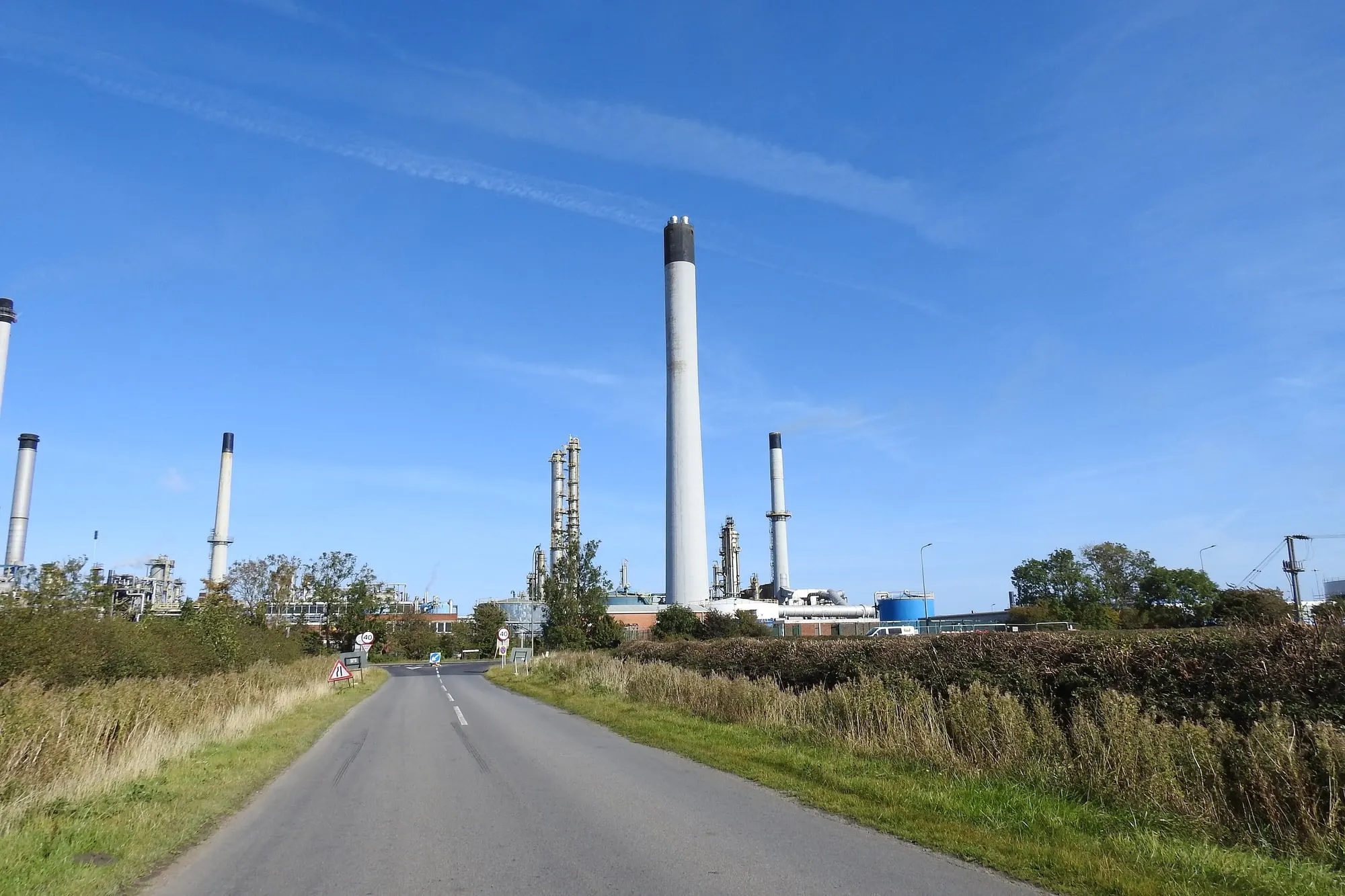

Phillips 66 is a US-headquartered energy company, and its Humber Refinery at South Killingholme, near Immingham, is one of its largest manufacturing sites outside the United States. The refinery processes crude oil into fuels and other petroleum products on a large industrial site on the Humber’s south bank, within easy reach of Immingham’s docks and the wider cluster of process industry that has grown up along this stretch of the estuary. It is a long-established part of the region’s chemicals and process sector, alongside neighbours such as the operators at Saltend Chemicals Park on the opposite bank near Hull.
Scale and what the refinery does
The Humber Refinery is a continuous-process oil refinery, meaning it runs around the clock rather than to a shift pattern that stops and starts. Crude oil arrives by ship and pipeline and is processed through distillation, conversion and treatment units into petrol, diesel, jet fuel and other refined products, most of which move onward by pipeline, road, rail and sea. Directly, the site employs roughly 750 to 1,100 people, a workforce regularly supplemented by contractors brought in for planned maintenance shutdowns, capital projects and specialist technical work — common across large refineries, where contractor numbers can rise sharply for weeks at a time during a turnaround.
The plant’s presence has shaped the surrounding area for decades. Alongside British Steel’s works in Scunthorpe, it is one of the historic large-scale industrial employers of North Lincolnshire, and it sits close to Immingham, whose docks handle a substantial share of the region’s energy and bulk trade. For people weighing up options in the wider ports and logistics corridor, the refinery is often mentioned in the same breath as the port itself, even though the two are run by different operators.
Typical roles and departments
A refinery of this size needs a wide spread of disciplines to keep running safely, and Phillips 66’s Humber site reflects that breadth. Roles broadly fall into the following areas:
- Process operations — operating and monitoring the units that convert crude oil into finished products, working rotating shift patterns to maintain 24-hour cover
- Engineering — mechanical, electrical, instrumentation and process engineering roles supporting reliability, plant upgrades and technical problem-solving
- Maintenance and craft trades — the skilled trades (see below) that keep pumps, pipework, electrical systems and instrumentation running and safe
- Health, safety and environment (HSE) — a large industrial site handling hazardous materials has HSE as a core function rather than a support role
- Turnaround and project management — coordinating major planned maintenance shutdowns and capital investment projects, often involving large contractor teams
- Business support — finance, procurement, logistics and administrative functions that keep a site of this scale running commercially as well as technically
The craft apprenticeship route
Phillips 66’s best-known entry route locally is its four-year craft apprenticeship, which the company runs to bring on the next generation of skilled tradespeople for the refinery. The programme takes on up to around 12 apprentices a year, training them in disciplines such as instrumentation, electrical and mechanical craft skills over the full four years, combining structured off-the-job training with hands-on experience on the live plant under experienced tradespeople.
This kind of long apprenticeship is typical of heavy process industry, where the safety-critical nature of the work means a shorter programme would not build the depth of competence needed to work independently on refinery plant. Applicants typically apply through the refinery’s own recruitment process, usually announced ahead of each intake, and come in with a good general education including maths and science, though a technical qualification is not always a prerequisite at this stage. Local technical education providers, including Ron Dearing UTC and ENL UTC, have links with employers like Phillips 66, and HETA and the TEC Partnership offer related engineering apprenticeship routes across the wider Humber area for those who don’t secure a place directly with the refinery.
Pay and what the work involves
Phillips 66 does not publish Humber-specific salary scales for public reference, so treat any figures here as broad, general indicators rather than quotes tied to a live vacancy. Apprentice craft trainees typically start on a structured apprentice wage that rises through the four years of training, while qualified process operators and craft technicians in UK refining more generally tend to earn somewhere in the region of £30,000–£45,000 depending on experience, shift pattern and specialism, with engineers and senior technical roles often higher again. Always check the current listing on the refinery’s own careers page for accurate figures.
Refinery work is shift-based for most operational and maintenance roles, and the environment is a controlled but genuinely hazardous one — working around high-pressure plant, hydrocarbons and rotating machinery, all governed by strict permit-to-work and safety procedures. It tends to suit people who are methodical, comfortable with formal safety discipline, and willing to work rotating shifts including nights and weekends. Engineering, HSE and business support roles offer a more conventional working pattern, though still closely tied to the rhythm of a live industrial plant.
Working at the Humber Refinery
Independent, publicly available detail on day-to-day working culture at the Humber Refinery specifically is limited, and this profile does not draw on insider accounts or employee reviews. What is clear is that the site represents a long-term, stable presence in the area’s industrial base, in contrast to some of the newer, still-scaling projects elsewhere in the region’s energy sector. Anyone weighing it up alongside other options should check current vacancies directly on Phillips 66’s Humber Refinery page, and compare it against the wider chemicals and process sector, including the cluster of operators at Saltend near Hull. Those specifically interested in the apprenticeship route may also find our general guide to how to get into engineering without a degree useful when preparing an application.
Independent editorial profile written by Humber Careers; not sponsored by or supplied by Phillips 66 — Humber Refinery. Confirm current details on the employer's own site before applying.